
-
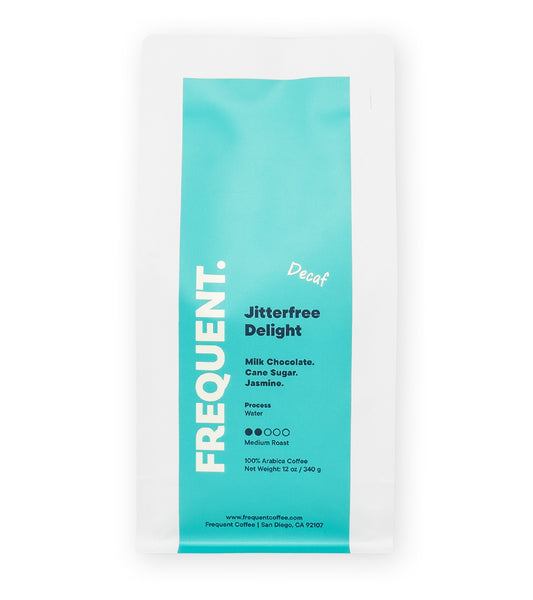
Jitterfree Delight | Decaf | Swiss Water® Decaffeinated
Regular price From $23.00 USDRegular price -
Suke Quto | Natural | Swiss Water® Decaf | Ethiopia
Regular price $20.00 USDRegular price

How Much Caffeine Is in Decaf?
The FDA puts an 8oz cup of decaf at roughly 2 to 15mg of caffeine. A regular cup runs somewhere between 80 and 165mg depending on size, bean, and brew method. Decaffeination substantially reduces caffeine, but it never removes all of it.
What Medical Guidance Says
The American College of Obstetricians and Gynecologists says moderate caffeine consumption, defined as less than 200mg per day, does not appear to be a major contributing factor in miscarriage or preterm birth. Caffeine from all sources counts toward that total, including coffee, tea, chocolate, energy drinks, and soft drinks.
Individual circumstances differ. If you have questions about caffeine during your own pregnancy, particularly if yours is high risk or you have been told to avoid caffeine entirely, talk with your doctor or midwife.
Why Swiss Water® on This Page
We use four decaffeination methods across our range. Swiss Water states its process achieves a 99.9% caffeine free target, which is the most complete removal of the four, so it is the one we put forward here.
To put that in context, the difference between decaffeination methods generally amounts to a small number of milligrams relative to ACOG's guidance of less than 200mg of caffeine per day. If minimizing caffeine is your priority, Swiss Water is the simplest choice. If you would rather choose on flavor, the rest of our decaf range is open to you, and any individual concerns are worth raising with your doctor or midwife.
Brewing It
Brew decaf the way you brew anything else. Drip, pour over, French press, AeroPress, espresso, and cold brew all work. One adjustment is worth making: grind a step coarser than you would for a full caf coffee. Decaffeination leaves the bean more brittle, so it breaks into more fines, and those fines over-extract and turn the cup bitter.
If smell is an issue for you right now, cold brew is worth trying. It is far less aromatic while brewing than hot methods.
Common Questions
Is decaf coffee completely caffeine free?
No. Decaf coffee still contains small amounts of caffeine. The FDA puts an 8oz cup at roughly 2 to 15mg.
How much decaf can I drink while pregnant?
That is a question for your doctor or midwife. For context, ACOG defines moderate consumption as less than 200mg of caffeine a day, and the FDA puts decaf at roughly 2 to 15mg per 8oz cup. Tea, chocolate, energy drinks, and soft drinks count toward the same total.
Swiss Water® vs. sugarcane EA: which has less caffeine?
Swiss Water removes more caffeine, so if minimizing caffeine is your priority, it is the straightforward choice and the reason this collection features it. Sugarcane EA decaf also removes the vast majority of caffeine. If you have questions about which coffee or decaffeination method is appropriate during pregnancy, ask your doctor or midwife.
How does the Swiss Water® Process work?
Green coffee is soaked in a water solution already saturated with the compounds that carry coffee flavor, so only the caffeine migrates out of the bean. The caffeine is captured on carbon filters and the solution is reused. Water, temperature, and time, with nothing added.
Does decaf taste different from regular coffee?
Good decaf tastes like good coffee. The gap has closed enormously in the last decade. Decaf is what we built this roastery around, so it gets the same sourcing and roasting attention as anything else we sell rather than being an afterthought.
What about half caf?
Half caf runs around 45 to 50mg per cup, which is a meaningful amount rather than a trace. If reducing caffeine is the goal here, decaf is the more straightforward choice.