What Makes the Best Decaf Coffee
Most decaf is an afterthought. Bulk beans, old crop, roasted dark enough to hide what went wrong. That is why so many people think they do not like decaf.
We source the best decaf coffee beans the same way a roaster sources their flagship single origins. Named producers, named farms, documented processing. Wilton Benítez in Piendamó. Finca El Paraíso in Cauca. Los Nogales in Huila. Then we roast in small batches in San Diego and ship fresh, because freshness matters more for decaf than for anything else on the shelf.
Rated by Coffee Review
Coffee Review is the longest running independent coffee rating publication. It scores blind on a 100 point scale. Three Frequent Coffee decafs have been reviewed, and all three scored 92 or higher.
| Score | Coffee | Process |
|---|---|---|
| 94 | Red Bourbon, Wilton Benítez | Sugarcane EA |
| 93 | Finca El Paraíso Yeast Inoculation | Sugarcane EA |
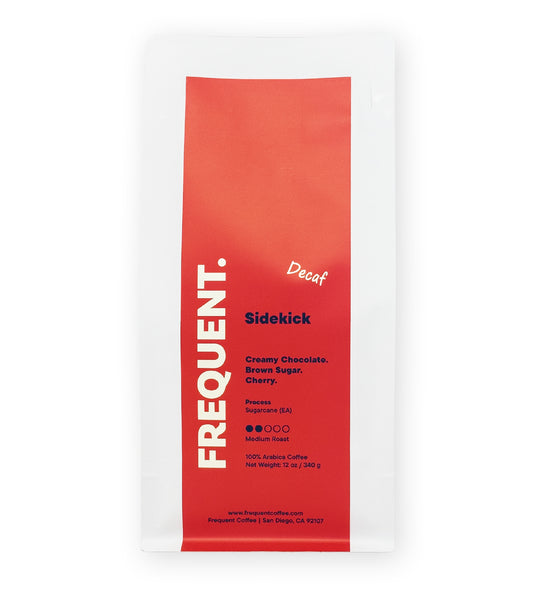
| 92 | Sidekick | Sugarcane EA |
The 94 point score for our Red Bourbon, awarded in April 2026, is the highest score Coffee Review has ever given a decaf coffee. Sidekick at 92 is our everyday bag, which matters more than the number suggests. It means the coffee you drink on a Tuesday morning is held to the same standard as the one that set the record.
How Much Caffeine Is in Decaf Coffee
Decaf is not caffeine free. In the United States, coffee labeled decaffeinated must have at least 97% of its original caffeine removed, which leaves a small measurable amount in the cup. A regular cup of coffee runs 80 to 100mg. Decaf runs roughly 2 to 7mg depending on the method.
| Method | Caffeine per 8oz | Do We Use It |
|---|---|---|
| Ethyl acetate (EA) | 2 to 7mg | Yes |
| Swiss Water® | 2 to 4mg | Yes |
| CO2 | 3 to 5mg | No |
| Methylene chloride | 1 to 5mg | Never |
Values are typical ranges and vary by origin, roast, and brew method. Full breakdown by method here.
Sugarcane Process and Water Process Decaf
We use two decaffeination methods, and both preserve flavor in ways the older solvent methods do not.
Sugarcane EA uses ethyl acetate derived from fermented sugarcane. It is the dominant method in Colombia and tends to produce sweet, syrupy, full bodied cups.
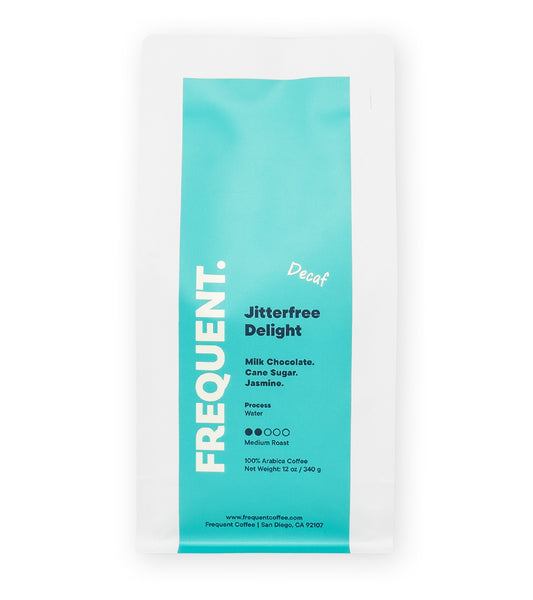
Swiss Water® uses only water, temperature, and time, with no solvents at any stage. The Swiss Water facility and process are certified organic, which means organic beans keep their certification through decaffeination. It produces a clean, mellow cup with softer acidity.
Neither is better than the other. They are different tools, and which one suits you depends on what you want in the cup.
Where to Start
If you want the one that set the record: Red Bourbon. Caramel, peach, cola, bergamot. 94 points.
If you want something for every morning: Sidekick. Creamy chocolate, brown sugar, cherries. 92 points.
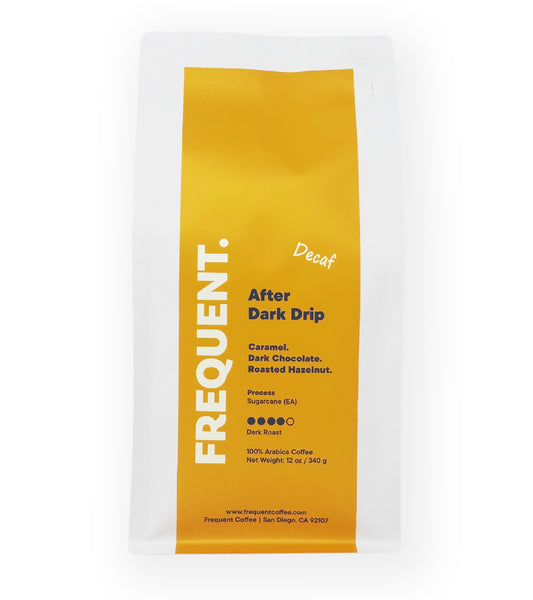
If you pull shots or drink it after dinner: After Dark Drip. Deep chocolate, buttery caramel, toasted hazelnut. The dark roast gives it the body and crema that espresso needs, and it holds up in milk.
If you want to see how far decaf can go: the black bags. These are the small batch releases where our producers push fermentation, yeast inoculation, thermal shock, and cascara reinfusion into territory most roasters never attempt with decaf.
Common Questions
Is Decaf Coffee Actually Caffeine Free?
No. US regulations require at least 97% of the original caffeine to be removed, which leaves roughly 2 to 7mg per 8oz cup depending on the method. Regular coffee runs 80 to 100mg. If you are highly caffeine sensitive, Swiss Water lots sit at the lower end of that range.
Does Decaf Coffee Taste Different from Regular Coffee?
Good decaf does not taste like a lesser version of regular coffee. It tastes like coffee. The reason most decaf disappoints is that it starts as low grade green coffee and sits too long before roasting, not because caffeine was removed. Three of our decafs have scored 92 points or higher at Coffee Review, which is territory most full caffeine coffees never reach.
Can I Drink Decaf Coffee at Night?
For most people, yes. At 2 to 7mg per cup, decaf is unlikely to affect sleep the way a full caffeine cup would. People who are highly caffeine sensitive may still notice it. More on decaf and sleep.
What Does Sugarcane EA Decaf Mean?
EA stands for ethyl acetate, a compound found naturally in ripening fruit. In sugarcane EA decaffeination it is derived from fermented sugarcane, then used to bond with and remove caffeine from green coffee. The method is common in Colombia and is known for preserving sweetness and body.
Do You Use Methylene Chloride?
No. Every decaf we sell is processed using either ethyl acetate or the Swiss Water® Process. We have never sourced methylene chloride decaf and we do not intend to.
Does Decaf Coffee Go Stale Faster?
Yes. Decaffeination makes green coffee more porous, which means the roasted bean stales faster than a comparable full caffeine coffee. This is the single biggest reason supermarket decaf disappoints. We roast in small batches and print the roast date on every bag.
What Is the Difference Between Your White Bags and Black Bags?
White bags are the daily drivers. Balanced, reliable, built for everyday brewing, and available on subscription at 20% off. Black bags are small batch specialty releases from producers doing unusual things with fermentation and processing. They can be added to a subscription order as a one time purchase.
Where Is Your Decaf Roasted?
San Diego, California. We roast in small batches and ship the same week, with free US shipping on orders over $35.
Ready to buy decaf coffee online from people who take it seriously? Everything above is in stock, roasted fresh, and shipping free on US orders over $35.