




Stay Social
Common Questions
What is mucilage EA decaffeination?
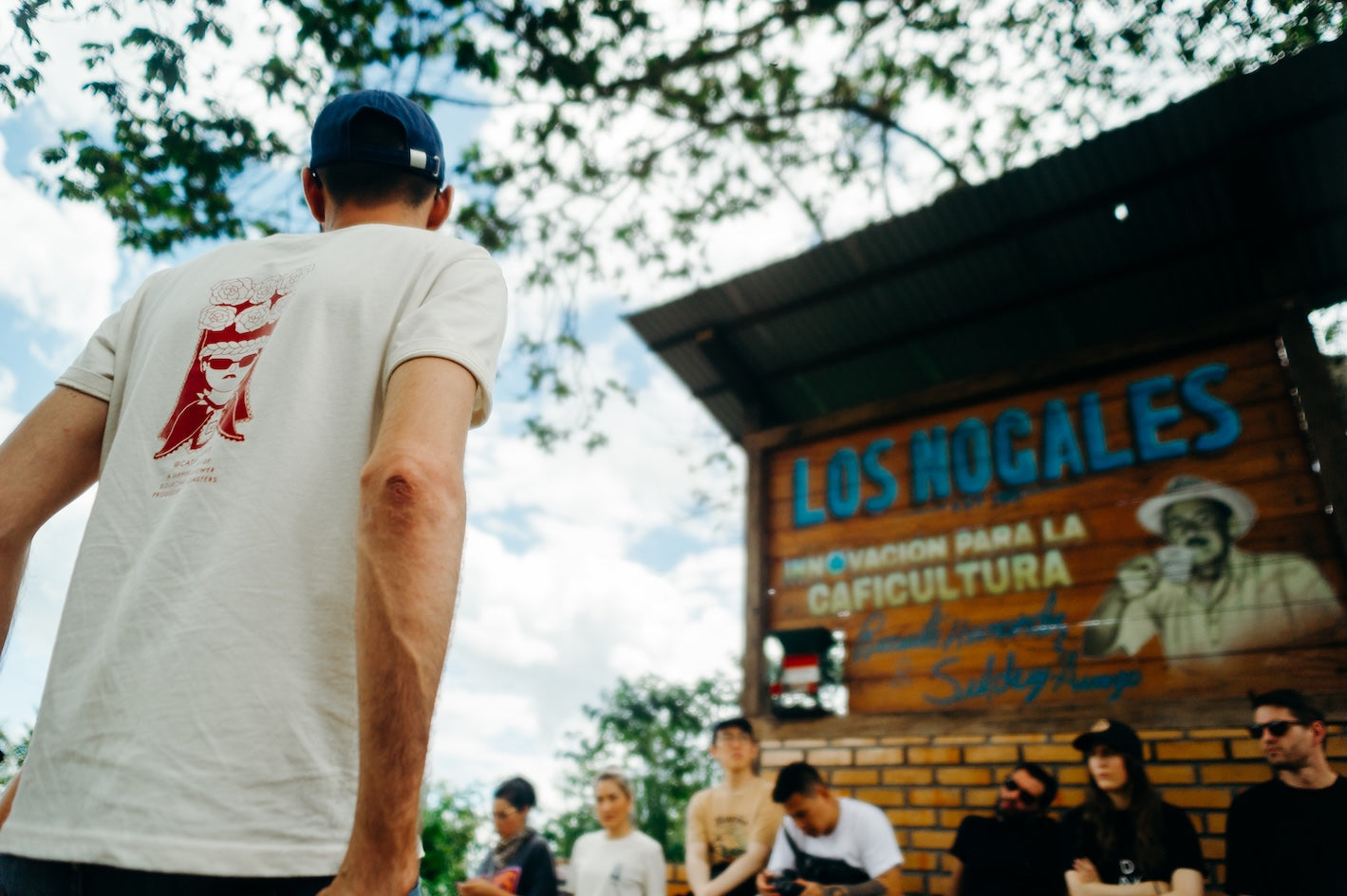
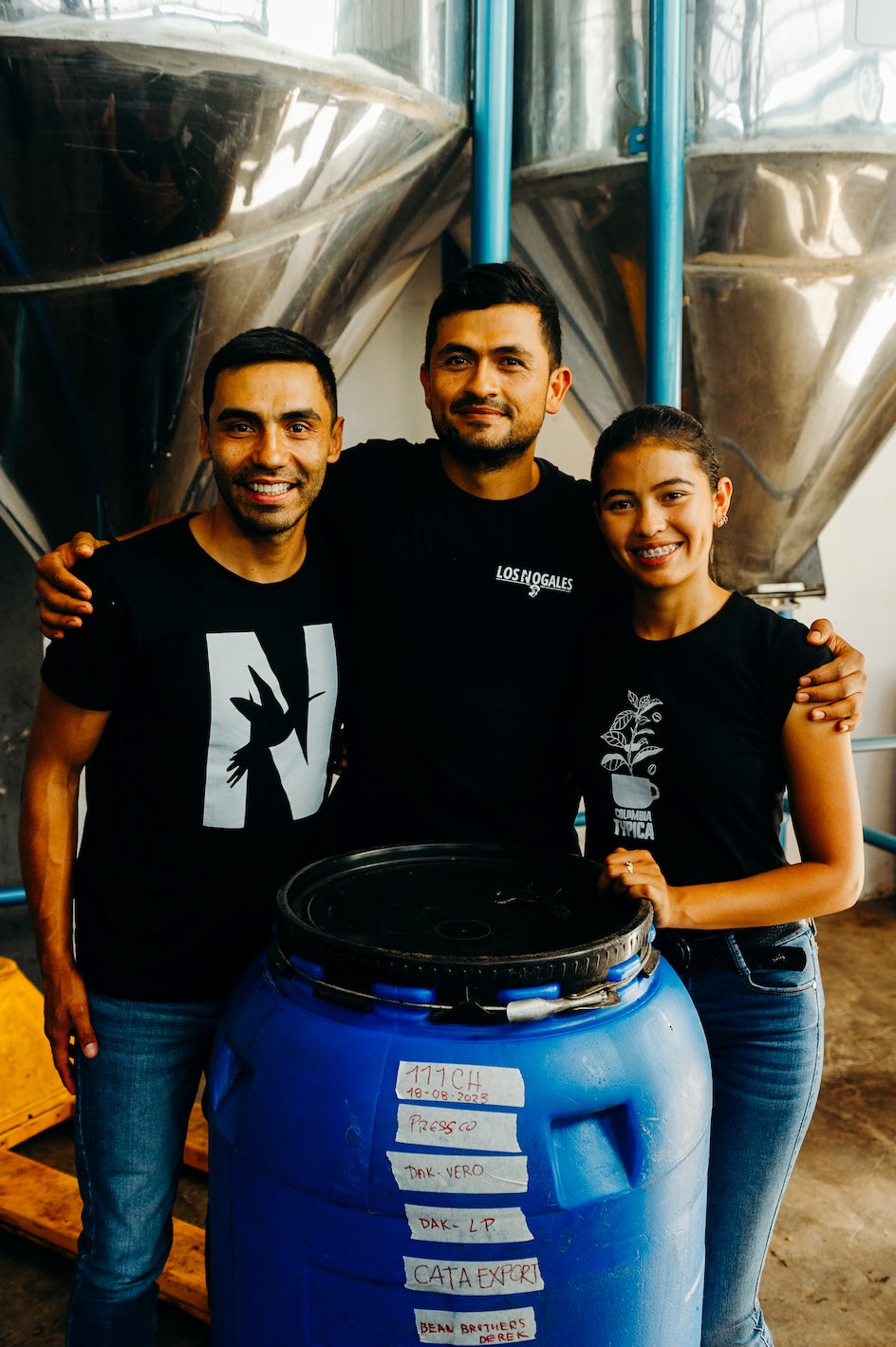
It is one of the rarest decaffeination approaches in the world, sometimes called mossto decaf. Standard EA decaf uses ethyl acetate derived from sugarcane. This method uses a solvent created from the coffee's own fermented mucilage, the sticky layer around the seed, so the coffee is effectively decaffeinated with itself. Los Nogales developed the approach on their own farm. It is a large part of why this cup keeps so much fruit and aromatic intensity.
How is this different from sugarcane EA decaf?
Same family of process, different source for the solvent. Sugarcane EA uses ethyl acetate from fermented cane, and it is what we use across most of our range because it preserves sweetness well. Mucilage EA sources the solvent from the coffee fruit itself. It is far rarer, done at farm level rather than at a dedicated facility, and the results here are more intense and more tropical than sugarcane EA typically gives you.
Why do the beans look so dark if it's a light roast?
The mossto processing and mucilage EA decaffeination darken the exterior of the bean before it ever reaches the roaster. What you see in the bag is the process, not the roast. This is roasted very light and delicately, and the cup will tell you that immediately.
What does it taste like?
Jackfruit, passionfruit, pineapple, and coconut. Vibrant, fruit-forward, and intensely aromatic, with real acidity. This is the most extreme coffee we offer and it is not trying to taste like a familiar morning cup. If you want something rounded and chocolatey, Sidekick or After Dark Drip will suit you better. If you want to find out how far decaf can go, this is it.
Is this the coffee that won the US Brewers Cup?
This lot shares the same origin and decaffeination method as the coffee Weihong Zhang used to win the 2024 U.S. Brewers Cup Championship, the first time a decaffeinated coffee took that title. The win belongs to him and to his brewing, not to us. What it tells you is what this processing is capable of in the right hands. Los Nogales has kept refining the method since.
Where does it come from?
Los Nogales, a 20.5 hectare farm in Pitalito, Huila, Colombia, grown between 1,870 and 2,000 metres under native shade trees. The variety is Caturra. Fully ripe cherries are handpicked, floated to remove defective fruit, fermented whole in sealed oxygen-free tanks for 24 hours, washed, slow-dried on raised beds, then hulled to Excelso grade before decaffeination. Only Excelso grade goes forward.
How should I brew it?
Pour over is where the fruit and aromatics show best. V60 and similar cone brewers suit it, and it holds up well over ice. Start where you would for a light roast washed Colombian and adjust from there.
On a V60 we like a 1:15 ratio, water at 205F, and a medium to fine grind, brewed in a bloom plus three pours over about 3:30 total. Plenty of people prefer cooler water around 190F, so it is worth trying both.
How long should I let it rest, and what size does it come in?
2 to 4 days from the roast date. It comes in 8oz only, as whole bean or ground to order. Like all our special releases it is limited and not subscription-eligible as a recurring item, though you can add one to an existing subscription order as a one-time purchase.