


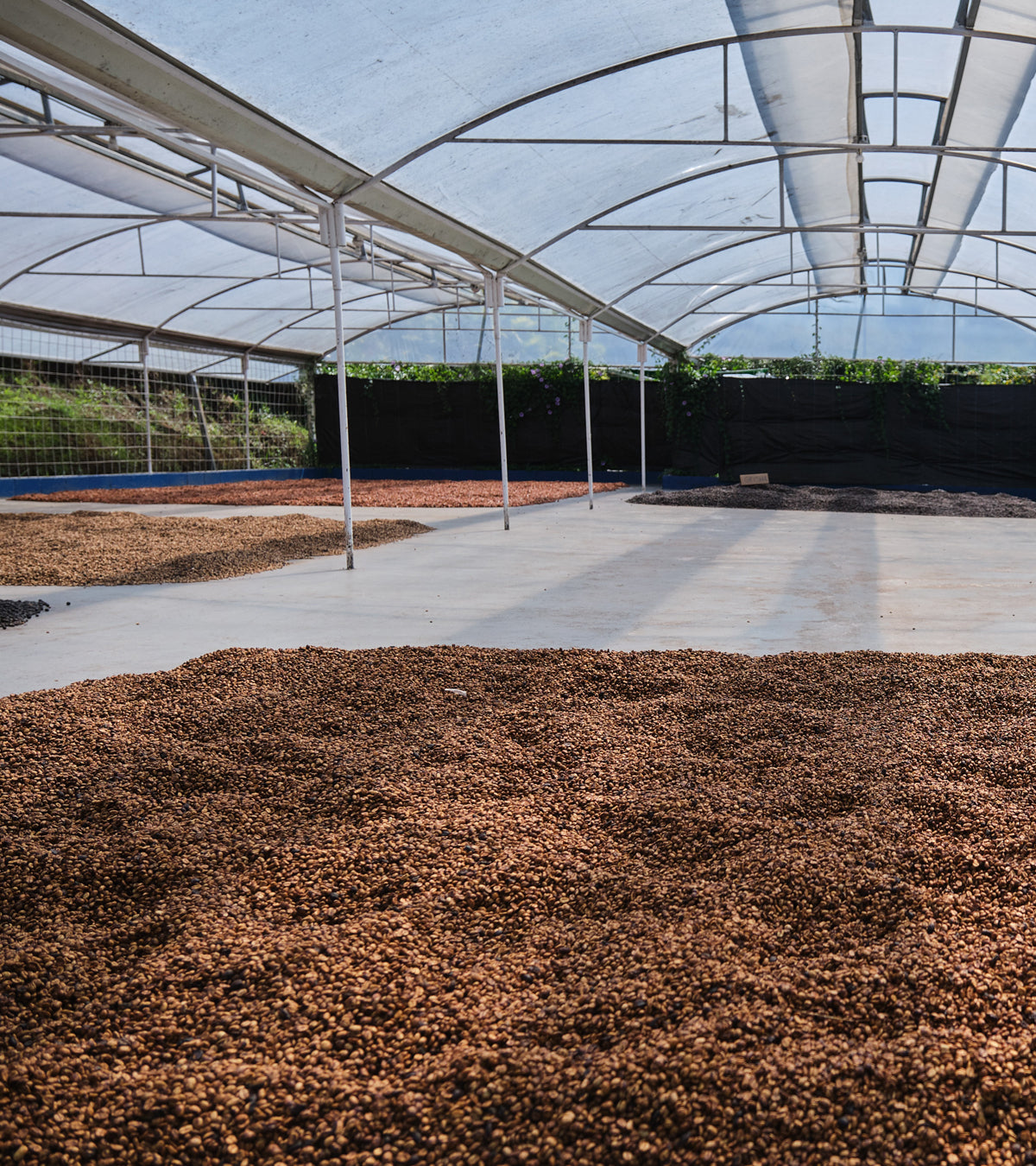
Laurina varietal naturally low-caffeine coffee from Las Lajas farm. Customers praised its complex flavor profile with "wonderful and complex" notes, describing it as "dangerously delicious." Works well as espresso with layers of flavor. One customer noted less aroma and body compared to other Laurina origins, possibly due to roast age.
I discovered Frequent via the HYUNAH Coffee Club and I am always keeping an eye out for quality decaf. I seem to have found my spot. Frequent is loaded with the good stuff and I was very happy to find the naturally less caffeine Laurina varietal, from a favorite farm Las Lajas. Will be ordering again soon!!
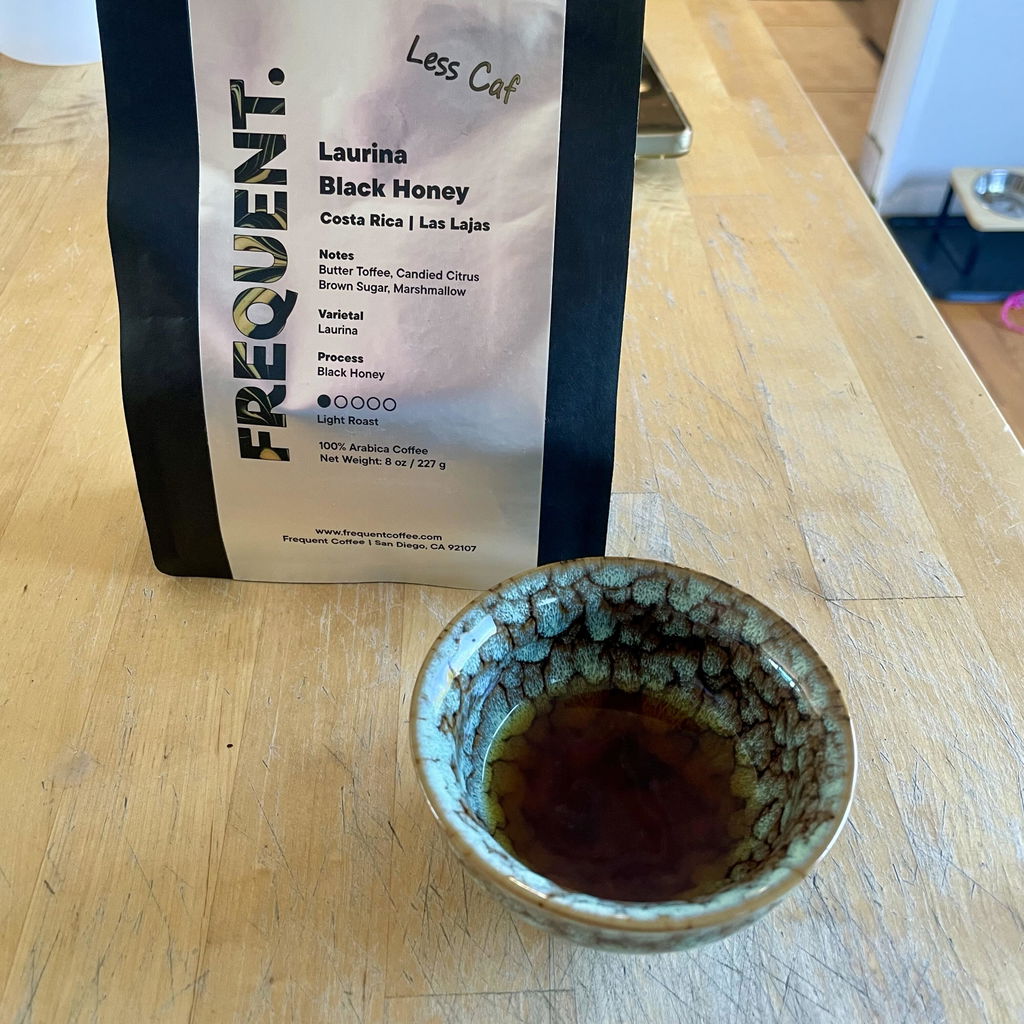
Maybe one of the tamer offerings from the Special Release series, but really a gem. This one is roasty enough to satisfy your medium and dark roast drinkers and acidic and fruity enough to be interesting.
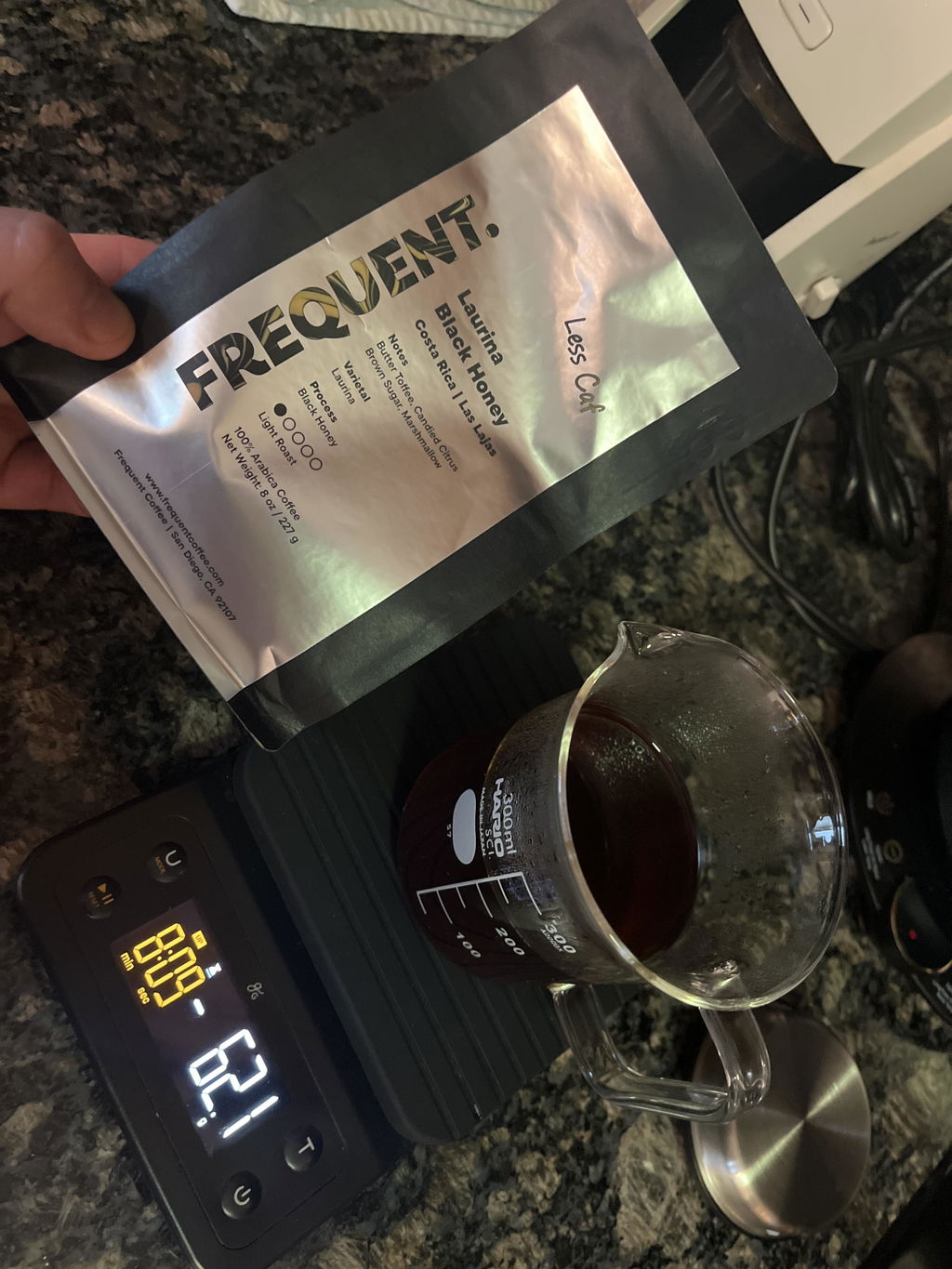
Thanks, Andrew! We really appreciate it.
Really nice, balanced coffee with good acidity. Notes of toffee, caramel, and a little bit of citrus but not over roasted. It’s really nice when I need a little bit of caffeine but don’t want to overdo it.
Glad I got to try these but this varietal needs a lot of work before it can compete with a decent homemade decaf/caff blend. Lightly roasted but not much light roast notes. Needed 2 weeks of rest at least. Maybe if you're trying to avoid processing this is a good option, otherwise pass.
Tastes great! Smooth low caffeine that lasts.
I tried Laurina beans from Guatemala and Brazil before. Frequent's Laurina from Costa Rica has least aroma, flavors and creamy body. It had very little blooming when I brewed with my V60, so I guess that it was roasted more than 3 months ago. It is of course better than other decaf beans.
awesome
Thank you, Antonio!
Wonderful and complex! Been drinking this mainly as espresso and it’s lovely. Have been able to have one in the afternoon without disruption to my sleep :) A little brown sugar helps express the flavor notes nicely, plenty of layers to this one!
Thanks for the review, Ryan!
I would certainly buy more than 8 oz!
Thanks for the feedback, Antonio! We really appreciate it.
Dangerously delicious. I would write more, but I need to make myself a second cup of coffee.
Thanks, Lia!
Terrific! Love the lower impact slight caffeine lift. Wonderful taste too!
Thanks, William!
Stay Social
Common Questions
Is Laurina a decaf coffee?
No. Nothing is removed from this coffee. Laurina is a variety that produces less caffeine while it grows, so there is no decaffeination step at any point. That makes it a different category from decaf. If you want caffeine removed down to trace levels, that is our decaf lineup. If you want a cup that was never high in caffeine to begin with, that is Laurina.
How much caffeine is in Laurina coffee?
Published figures for the variety put Laurina at roughly half the caffeine of conventional Arabica, in the range of 40 to 60mg per 8oz cup against 80 to 100mg for a standard cup. Those are published figures for the variety rather than measured values for this lot, and caffeine levels vary between harvests and growing conditions. For scale, decaf sits far lower still, around 2 to 7mg per cup. Laurina lands in between: noticeably gentler than regular coffee, but not the near-zero of decaf.
What is Laurina coffee?
Laurina is a natural mutation of Bourbon, first found on Réunion Island. It is also called Pointu Bourbon for its elongated, pointed beans. Two things make it unusual. It produces substantially less caffeine than conventional Arabica, and it is difficult to grow and low yielding, which is why very little of it reaches the market. It remains one of the rarest commercially available Arabica varieties.
What is Black Honey processing?
The cherries are sorted, then depulped with nearly all of the sticky mucilage left on the bean. The coffee dries slowly on raised beds with minimal movement through the first several days. Longer drying with the fruit sugars still attached builds sweetness and body. Black Honey was pioneered at Las Lajas, the micromill that processed this lot, and it gives the cup a silky texture and clarity.
What does it taste like?
Butter toffee, candied citrus, brown sugar, and marshmallow. Sweet and elegant rather than heavy, with lively citrus and balanced acidity. We roast it light to protect that sweetness and the delicate complexity underneath it.
How should I brew it?
Pour over shows it best. V60, Hario Switch, Kalita Wave, Chemex, automatic drip, and immersion brewers all work well. Use clean filtered water and a medium grind to bring out the sweetness, citrus, and silky body. One note if you normally drink decaf: Laurina is not decaffeinated, so the bean is not brittle the way decaf is. Grind it as you would any other washed or honey processed Arabica rather than coarsening up.
How long should I let it rest?
5 to 8 days from the roast date. Freshly roasted coffee releases carbon dioxide for the first several days, which interferes with even extraction. Because Laurina is not decaffeinated, it needs a little longer to settle than our decafs do.
Who grew this coffee?
Oscar and Francisca Chacón at Finca Sabana Redonda in the Central Valley of Costa Rica, grown between 1400 and 1600 metres and processed at their Las Lajas micromill. They are among the pioneers of the Costa Rican honey process movement and developed many of the honey and natural methods now used across the industry.
Why is it only available in 8oz?
Laurina is a special release. Those come in 8oz only and in limited quantities, because the lots themselves are small. Laurina is low yielding and hard to grow, so there simply is not much of it. Our everyday coffees come in 12oz and 5lb.